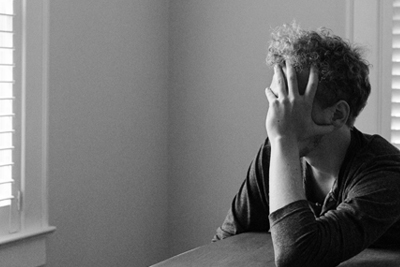
Men and Mental Health
Mental health involves mental well-being and how you respond and cope with stress. Mental health consists of building relationships, making decisions, and shaping how you see the world¹. It is an essential part of everyone’s health. Mental health has become more prominent in the last few decades. Mental health conditions include depression, anxiety, and eating disorders. Mental health conditions affect a person’s thinking, behavior, mood, or feeling². There are a few differences in mental health for males and females. Isaac Francis, graduate student at Grand Valley State University explores these.
Men’s mental health has become a stigma. Men are taught by society to “man up” and to be masculine³. Men are often criticized for crying and showing emotions. Men have been put down or made to feel less because of the stigma and pressure put on society that men have to be strong. Society has shown this consistently in social media and movies. These have put the wrong perceptions into the mainstream media. This has led to more people idolizing these strong men. This led to men feeling inadequate with themselves and leads to body image issues. Body image issues can make people depressed, anxious in social settings, feel the need to work out, and many other things. This affects both men and women, but it affects men differently.
Men want big muscles, as seen in social media and the movies. This can lead to men wishing to work out excessively, take steroids, and try to “bulk up.” These are often not helpful and can even be harmful. The need to get these big muscles ends up being dangerous. Focusing on protein can cause men to ignore other nutrients, leading to deficiencies. These deficiencies have negative health consequences.
COVID-19 has affected many things, but mental health has been dramatically affected. The shutdown from COVID-19 has caused many people to feel alone and isolated. In a study, nearly ½ of men said that their mental health has worsened during the pandemic³. This is concerning information and needs to be assessed. Over 6 million men suffer from depression each year in America³. Male depression is often underdiagnosed⁴. The number of men who are suffering from a mental health disorder is most likely higher than this. Men are less likely to seek treatment for mental health issues due to feeling weak or not man enough. This further causes men to see mental health as a stigma or a non-issue because it does not affect men as much. This is not true and is mainly due to men avoiding or not seeking treatment.
Not seeking treatment is just one method that men are using to avoid the stigma. Men often do not want to talk about their problems and turn to other methods to cope with their feelings. Men are more likely to abuse alcohol and substances than women. Men are less likely to seek treatment because they don’t want to talk about their feelings, they feel like they would get ignored, or they feel "less than a man" if they seek help for their mental health. Men often express their mental health problems as anger, lashing out, or violence³. Men need to be equipped with coping strategies for stress and mental health concerns.
There are many ways to improve mental health. One good way is to connect and form good relationships. This could be a family member, a relative, a friend, or a healthcare professional. Talking about your emotions and feelings is essential to improving your mental health. Another step is to practice mindfulness or being in the moment. Mindfulness is about being in the present. It could be focusing on the texture and taste of the food or the sounds around you while watching TV. This is helping you be in the present and focus on what is happening. Another great way to improve your mental health is to do what you love. You love hanging out with friends, so go and do it. If you like to play video games online, go and do it. Finding enjoyment in your hobbies brings you excitement and can help you clear your mind for a while.
Mental health is essential for everyone. Men have trouble asking for help and talking about how they feel. Men express feelings differently than women, and that has led to some differences and stigma around men’s mental health. Seeking treatment for mental health does not make you less masculine or “unmanly”. This is a misconception that needs to be cleared up. Seeking and asking for help is what everyone should do if they have any mental health issues, regardless of gender. Health is important, and mental health is a significant component of health. There are several ways to improve your mental health, and I hope that more men take the initiative. The stigma around men’s mental health should be broken.
References
1. Mental health. WHO. June 2022. Retrieved March 24, 2025. https://www.who.int/news-room/fact-sheets/detail/mental-health-strengthening-our-response
2. Mental health conditions. National alliance of mental illness. 2025. Retrieved March 24, 2025. https://www.nami.org/About-Mental-Illness/Mental-Health-Conditions/
3. Men’s mental health: a vital factor for overall good health. Vail health foundation. June 2021. Retrieved March 24, 2025. https://vailhealthfoundation.org/news/mens-mental-health-a-vital-factor-for-overall-good-health/?msclkid=56d10cfdab261289ec656b1c32c75e91&utm_source=bing&utm_medium=cpc&utm_campaign=VHF%20-%20News%20(National)&utm_term=Men%27s%20mental%20health%20info&utm_content=Men%E2%80%99s%20Mental%20Health
4. Men’s mental health. ADAA. 2025. Retrieved March 24, 2025. https://adaa.org/find-help/by-demographics/mens-mental-health