Spravato Offers New Hope to those Battling Depression
Rochester Center for Behavioral Medicine is among the first in Michigan to offer esketamine nasal spray, a safe, effective option for patients
For many metro Detroiters suffering from treatment-resistant depression, hope has been hard to come by – until now.
The Rochester Center for Behavioral Medicine is proud to be leading the way. Late last month, we became one of the first practices in Michigan to offer Spravato (esketamine), a groundbreaking new drug used to fight depression when other treatment options have failed.
Clinical trials proved so successful that the Food and Drug Administration fast-tracked approval of the drug in March. Our clinic was the largest in the state to take part in the studies - and we witnessed the positive results firsthand.
“Spravato is a game changer for our patients who suffer from treatment-resistant depression,” said Joel Young, MD, medical director and founder of RCBM and a primary investigator in the Spravato clinical trial. “Not since the 1980s when Prozac first became available have we seen such a major development in depression treatment. Spravato targets a different mechanism in the brain, providing significant and rapid symptom relief without continued troublesome side effects. It’s a win-win for most patients.”
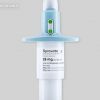
Spravato is an esketamine nasal spray approved for use in adults 18 and over, in conjunction with an oral antidepressant. To be considered for this treatment, patients must have tried and failed at least two oral antidepressants in the past two years.
Esketamine is a member of the same chemical family as ketamine - a highly controlled anesthetic - and therefore must be self-administered under medical supervision in our office. Our Spravato medical team then monitors the patient’s vital signs and mental state for two hours before the patient can leave.
For some patients, a significant decrease in symptoms has been reported in as little as two days.
”When oral antidepressants and other therapies are not enough to alleviate this type of depression, Spravato offers hope and an alternative to treatments like electroconvulsive therapy, ” says Jaime Saal, MA, LPC, NCC, RCBM’s executive director. “Esketamine is a powerful drug that can have a profound impact on our patients’ quality of life.”
Roughly 16 million Americans suffer from major depressive disorder each year, and as many as 30% of them don’t respond to therapy. They include women and men, young and old, from all walks of life. It is for these people, who suffer daily with unrelenting symptoms that include debilitating sadness and fatigue, that Spratavo holds great promise.
“Our hope is that Spravato proves beneficial for our severely depressed patients who have tried unsuccessfully with other courses of treatment,” Young says. “Breakthrough treatments such as this can help to drive down suicide rates and hospitalizations while empowering each patient with hope and the relief they deserve.”
Here are some frequently asked questions:
WHO IS ELIGIBLE TO RECEIVE SPRAVATO?
Adults ages 18 and over who have a history of major depressive disorder and who have not responded to two or more oral antidepressants within the past two years. Spravato is not recommended for patients who have aneurysmal vascular disease or arteriovenous malformation, a history of intracerebral hemorrhage, a hypersensitivity to esketamine and who are pregnant, may become pregnant or are breastfeeding.
HOW DOES THE TREATMENT WORK?
Spravato operates through a different mechanism in the brain than oral antidepressants, alleviating depression symptoms quickly in many patients and significantly delaying relapse. Because Spravato is a Schedule III controlled substance, it must be administered in a doctor’s office. When the patient arrives, he or she will be instructed on how to self-administer the spray.
Each spray device contains 28 mg of esketamine. How many devices a patient uses depends on the dose prescribed. After the patient self-administers the prescribed dose under our medical guidance, he or she must remain in our care for two hours. During this time, a member of our Spravato medical team will monitor the patient’s vitals and mental state to ensure he or she is all clear to leave with their driver after two hours have passed.
WHAT ARE THE SIDE EFFECTS?
The side effects are short-lived and include feeling or sensitivity (hypoesthesia), anxiety, lethargy, increased blood pressure, vomiting and feeling “drunk.” Patients should not drive or use heavy machinery on the day of treatment.
WHAT IS THE TREATMENT SCHEDULE?
Patients receive Spravato twice a week for the first month of treatment, and once a week for the second. Patients receive a 56 mg for the initial dose and then may be given 56 mg or 84 mg doses thereafter. The frequency of maintenance treatments during month 3 and beyond is determined on a case-by-case basis, depending on each patient’s progress and need.
WILL MY INSURANCE COVER SPRAVATO?
Because Spravato is so new to the market, many insurance companies are currently in the process of determining member coverage. Our staff works with insurance providers to determine patient eligibility and obtain authorization prior to the start of treatment.
HOW DO I FIND OUT MORE?
Call us at (248) 608-8800 to schedule a consultation with one of our expert mental health care providers. With years of experience working with Spravato in clinical trials, we can help patients determine whether Spravato is right for them.